

Unlock the Benefits of the Improving Farm Productivity Grant with MD Electrical Construction Renewables
When considering battery storage solutions for a solar PV system, you’ll encounter two primary types: AC and DC coupling. To help you make an informed decision, let’s explore their differences, advantages, and drawbacks.
Starting with the Basics: AC vs DC Electricity
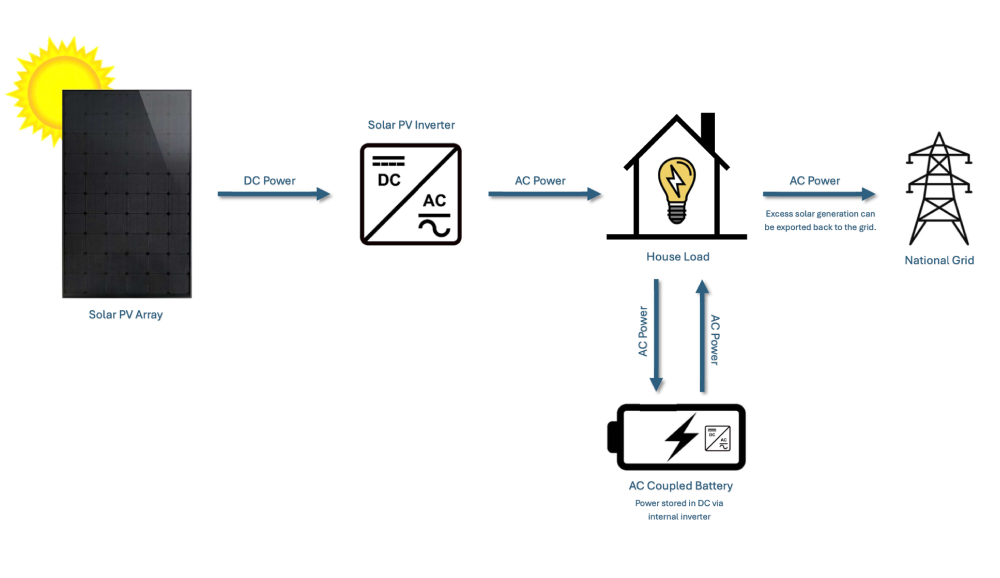
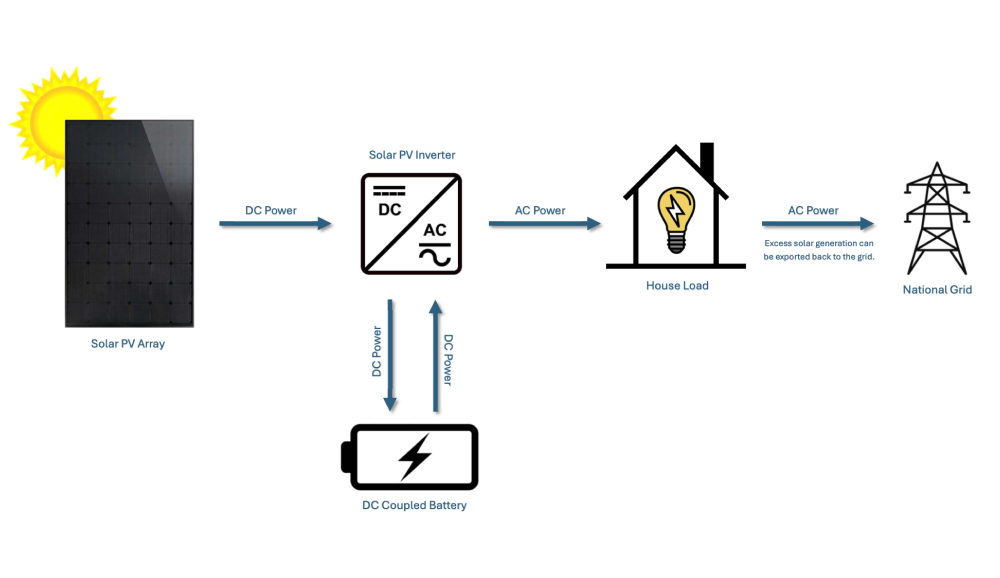
Solar PV panels produce Direct Current (DC) electricity, which is also how batteries store energy. However, most equipment in your home or business runs on Alternating Current (AC). To bridge this gap, an inverter is used to convert electricity from DC to AC.
The distinction between AC and DC coupling lies in how this conversion process integrates the solar PV system and battery storage.
Key Differences Between Standard and Hybrid Inverters
- A standard solar PV inverter converts DC energy from the solar panels into AC for immediate use or export to the grid.
- A hybrid inverter, on the other hand, manages both the solar PV system and the battery storage, performing the DC-to-AC conversion for both. This integrated approach is known as DC coupling.
In contrast, AC coupled systems use a separate inverter for the battery storage. This independent setup allows both the solar PV system and the battery to discharge to load simultaneously, offering potentially higher overall output compared to a hybrid DC coupled system, which is limited by a single inverter.

Advantages and Disadvantages of DC Coupling
Pros:
- Efficiency: Fewer DC-to-AC conversions mean lower energy losses, resulting in a more efficient system.
- Cost-Effectiveness: Sharing a single inverter between the solar PV system and battery storage reduces installation costs.
- Simplified Grid Applications: Only one inverter needs to be registered, streamlining the grid connection process.
Cons:
- Space Requirements: The battery must be installed next to the solar PV inverter, typically at ground level, requiring adequate space.
- System Vulnerability: If the inverter fails, both the solar PV and battery systems shut down.
Advantages and Disadvantages of AC Coupling
Pros:
- Flexibility: The battery can be installed away from the main solar PV system, offering greater location versatility. AC coupling is also ideal for retrofitting onto existing solar PV installations.
- Higher Output Potential: The solar PV system and battery can operate simultaneously, discharging energy to the load.
- Resiliency: The independent operation of the solar PV system and battery increases overall system reliability.
Cons:
- Higher Costs: The need for additional inverters and cabling makes AC coupled systems more expensive.
- Increased Energy Losses: More frequent DC-to-AC conversions result in slightly higher system losses.

Choosing the Right System
The best solution for your site will depend on several factors, including:
- Available installation space
- Whether you already have an existing solar PV system
- Your budget and efficiency priorities
At MD Electrical Construction Renewables, we provide expert advice tailored to your specific needs. During our site survey, we’ll assess your project requirements and recommend the optimal system, whether for a commercial, industrial, developer, or domestic installation.
Get in touch today to discuss your project and find the right energy solution for your needs!






If you are located in London, Kent, Surrey, Essex, Cambridgeshire and Sussex and require any aspect of domestic or commercial electrical system installations, please contact us with any enquiries or to book an appointment.